Kattana: A Japanese-Style Display Font for Creative Projects
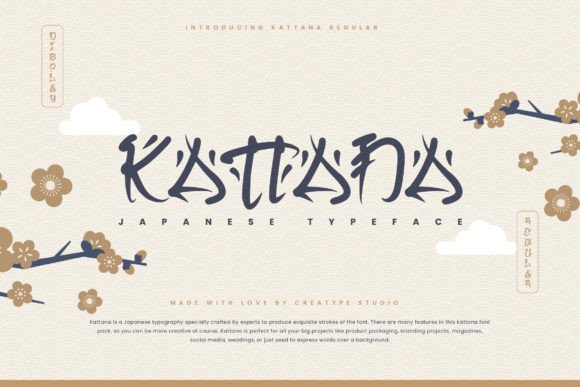
Kattana is a unique display font that draws inspiration from traditional Japanese typography. Designed with a stylized, elegant aesthetic, it offers a visually striking option for designers working on Japan-themed projects or looking to add a distinctive flair to their work. The font's name and design reflect its cultural roots, making it a compelling choice for those seeking authenticity in their visual communication.
One of the key features of Kattana is its PUA (Private Use Area) encoding. This allows users to access all of the font's glyphs, including special characters, swashes, and ligatures, without relying on complex keyboard layouts or software-specific tools. This makes it more accessible and user-friendly compared to some other fonts that may require additional configuration to use all available characters.
Why Someone Might Be Interested in Kattana
Designers and developers interested in creating content with a Japanese influence may find Kattana appealing. Its style can enhance the visual appeal of logos, branding materials, headings, and other design elements that aim to evoke a sense of tradition or cultural identity. The font's clean yet expressive lines make it suitable for both modern and classic designs.
For those working on projects that require a high level of customization, Kattana's PUA encoding provides flexibility. It allows for greater control over typography, enabling users to incorporate unique symbols and stylistic variations that might not be available in standard fonts. This can be particularly useful for designers who want to create something truly original.
Benefits of Using Kattana
The primary benefit of Kattana is its distinct visual character. It stands out from more generic display fonts, offering a fresh and authentic look that can elevate the overall design of a project. This uniqueness can be especially valuable in competitive markets where differentiation is key.
Another advantage is the ease of access to its full glyph set. With PUA encoding, users can directly access all characters without needing to switch between different font versions or rely on external tools. This simplifies the design process and reduces potential compatibility issues.
Tradeoffs and Considerations
While Kattana has many strengths, it may not be the best choice for every project. Its highly stylized nature may not fit well with more minimalist or modern design trends. In such cases, a simpler, more neutral font might be more appropriate.
Additionally, because of its specific design, Kattana may not support all languages or character sets. Users should verify whether the font includes the necessary glyphs for their intended use, especially if working with non-Japanese text or multilingual content.
Situations Where Kattana Is a Strong Fit
Kattana is ideal for projects that emphasize Japanese culture, such as branding for restaurants, event promotions, or cultural exhibits. It can also be used in creative fields like illustration, graphic design, and digital art to add a touch of elegance and sophistication.
For designers who prioritize visual impact and want to make a statement, Kattana can be an effective tool. Its ability to convey a sense of tradition while maintaining a modern feel makes it versatile across different design contexts.
Situations Where Alternatives May Be Worth Considering
If a project requires a more universal or widely recognized font, alternatives such as Noto Sans CJK or Meiryo may be more suitable. These fonts offer broader language support and are often preferred for professional or commercial applications where consistency and readability are critical.
In cases where a more minimal or neutral aesthetic is desired, fonts like Roboto or Open Sans might be better choices. They provide a clean, readable appearance that works well in a variety of settings, from web design to print media.
Practical Decision-Making Insights
When evaluating Kattana, consider the specific needs of your project. Ask yourself whether the font's unique style aligns with your design goals and whether its features meet your technical requirements. Testing the font in different contexts can help determine its effectiveness.
It's also important to think about the audience you're targeting. If your work is intended for a global audience, ensure that the font supports the necessary languages and character sets. For niche or culturally specific projects, Kattana can be a powerful asset.
Finally, explore how Kattana interacts with other design elements. Pairing it with complementary fonts, colors, and layouts can enhance its visual impact and ensure it contributes effectively to the overall design.
By carefully considering these factors, designers can make informed decisions about whether Kattana is the right choice for their work. Whether used as a standout element or integrated into a larger design scheme, Kattana offers a distinctive option for those looking to add a Japanese-inspired touch to their projects.